By BuildSupply Editorial Team
Fencing material orders should follow a checked line schedule and the approved pole specification. Separate ordinary line positions from gates, corners and any specially designed points before comparing quantities. Ask for the meaning of the quoted pole dimensions and any treatment evidence the specification requires. Neither a product photograph nor a nominal size label establishes suitability for a particular fence or a promised service life.
Fencing material orders: count positions rather than relying on a rough perimeter
Ask the survey or project team to identify the confirmed fence line and the points that control the count. Purchasing staff should not settle a disputed boundary by assuming an alignment. Once the line is agreed, give sections recognisable references and show their approved positions. Keep the design information that explains any different pole requirement at a corner, gate or change in direction.
A single total length is not a complete purchasing schedule. Two lines of equal length can have different numbers of approved positions, openings or special details. Preserve those differences in the enquiry. Where spacing or another design input is not supplied, refer the question to the responsible professional instead of borrowing a generic figure from a buying guide. The store can quote identified material, but the enquiry must communicate what the actual project requires.
Fencing material orders: turn the requirement into a comparable enquiry
Give each supplier the same enquiry revision. State the required material, purchasing unit, quantity and delivery destination on separate lines. Attach the specification references that explain the requirement, and identify who can answer technical questions. Avoid relying on a product photograph to communicate a dimension, performance requirement or included service. If a clarification changes the scope, record the change and make sure the offers being compared address the updated requirement.
Build a comparison with columns for the material, tax treatment, transport, offloading and other relevant responsibilities. An unanswered item should remain an open question rather than becoming a zero. Two quotations can show similar totals while covering different work. For example, transport to a gate and movement to an internal storage area are different scopes. Ask what each offer includes before treating a price difference as a saving.
Keep commercial preferences separate from technical compliance. A convenient delivery arrangement does not establish that a material matches the approved specification. Where a supplier offers an alternative, identify the exact difference and refer it to the authorised technical reviewer. The reviewer should see the original requirement and the proposed alternative together, with any supporting evidence. Purchasing staff should not approve a structural or performance change simply to complete the comparison.
Resolve differences before approving an order
Ask the supplier to state how long the quotation remains valid and which quantities it covers. An enquiry for a whole project is not necessarily a commitment to purchase the whole project. Distinguish the quantity proposed for immediate release from a later estimate. Confirm any payment method, LPO acceptance, credit request or discount in writing; none is established by this guide. Retain the response with the relevant offer and order reference.
Present an approval recommendation that identifies the preferred offer, its scope and unresolved conditions. Attach the original quotations rather than replacing them with an unexplained summary. A reviewer should be able to trace the recommended total to the enquiry and written clarifications. If a question remains material to the decision, identify the person responsible for resolving it and avoid representing the order as ready for release.
Finally, keep a dated copy of the schedule that was actually approved. The working spreadsheet may continue to change, but the issued order needs a stable reference. Mark later changes as revisions or variations and retain the earlier version. This gives the supplier, committee and receiving team a shared baseline when they discuss quantities, timing or an exception. The aim is a clear decision trail, not a complicated filing system.
Fencing material orders: check the endpoint assumption in a worked count
For arithmetic only, imagine a straight, isolated 60-metre segment with approved positions every three metres and a position at both ends. The segment has 20 intervals and 21 positions. This is not a recommended fence spacing or design. It shows why counting intervals and counting poles can give different answers. The approved arrangement must determine which endpoint and connection assumptions apply.
If another segment connects at a shared corner, check whether that corner has already been counted. Do not automatically add both standalone segment totals. Gates and specially designed points can also change the schedule. Record the treatment of each connection rather than forcing the overall count to match a rough perimeter division. An independent reviewer should be able to follow the position references and identify why the purchasing total differs from the number of simple intervals.
Fencing material orders: ask for specific evidence about the offered poles
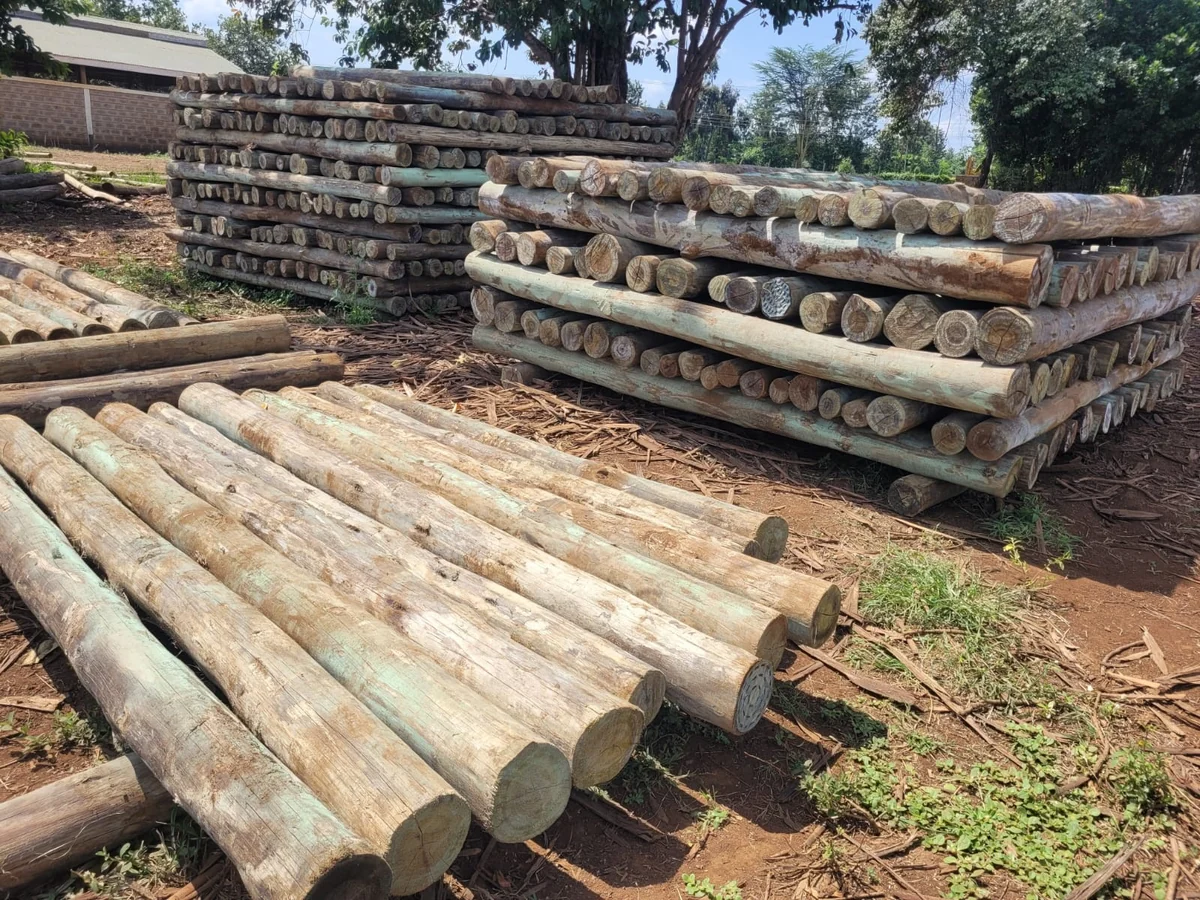
BuildSupply lists round poles in named diameter ranges and per-piece units. Confirm the available lengths, measurement basis and actual offered description on the quote. Do not assume that all pieces within a named range are equivalent for every application. The project specification should identify any property that matters to the intended use, and the receiving plan should say how the agreed requirement will be checked.
The word treated does not establish a particular preservative process, retention, certification or lifespan. Where treatment evidence is required, ask the supplier for the relevant documentation and have it reviewed by the responsible professional. Do not recommend site-applied chemicals or infer treatment adequacy from colour. This keeps the enquiry factual and allows the buyer to record a genuine evidence gap rather than replacing it with an unsupported durability claim.
Fencing material orders: check the connection between measured and purchased quantities
Retain the unit used in the approved BOQ and show the supplier's purchasing unit in a separate column. If the two differ, ask the responsible quantity reviewer to explain the bridge between them. A material described per piece, foot, length or load cannot be treated as interchangeable merely because the descriptions refer to the same project. The conversion needs a stated basis that the buyer can repeat.
Distinguish a theoretical net requirement from the quantity proposed for ordering. The net calculation describes the measured work under its assumptions. Cutting, handling or contingency allowances are separate purchasing decisions and should retain their reasons and approvals. Check whether an allowance is already included in the source schedule before adding another. Otherwise a well-intended precaution may duplicate a quantity already allowed by the project team.
Record measurements at a useful level of detail. Total footage can hide an unsuitable length mix, and a total piece count can hide differences in size. Similarly, an assumed volume does not prove a delivered mass. Identify the dimensions, length classes or delivery evidence relevant to the agreed sales unit. Do not invent a conversion factor or rely on appearance to settle a quantity that requires measurement or supporting documentation.
Make every conversion and allowance visible
Round only after understanding the unit in which the supplier actually offers the material. An internal calculation can produce a fractional figure, while the quotation may use whole pieces or another agreed increment. Show the unrounded calculation and the purchasing decision separately. Ask the supplier to confirm the commercial measurement basis. A neat rounded total should not conceal a change in specification or an assumption about stock that has not been confirmed.
Use a worked example to test the schedule before approval. Choose one representative line, reproduce its calculation and ask a second reviewer to follow the assumptions. If the results differ, compare inputs and units before changing the order quantity. The objective is not to force agreement with an existing spreadsheet. It is to understand why the calculation describes the approved work and whether it maps to a feasible purchase.
Keep the same unit labels on the receiving record and closing reconciliation. A count made using a different basis from the order may look like a shortage even when the underlying quantities have not yet been compared correctly. Resolve the unit question first and retain the explanation. This makes later payment, balance and variation discussions more accurate without pretending that an estimating worksheet is a structural design or a supplier's delivery certificate.
Fencing material orders: release poles by section and reconcile useful stock
Identify the section that each proposed release serves and the receiving position agreed for that load. A long farm or institutional boundary may require internal movements that are not included in a quotation to the main gate. Ask the supplier and site team to confirm the actual scope before assuming the delivery arrangement covers every work area.
Keep poles of different specifications distinguishable in the register. If a section changes, assess whether unused pieces match the revised requirement before transferring them elsewhere. Record the position or work-front reference on significant issues so the remaining count can be explained. Fencing material orders should make it possible to distinguish a design change, a counting difference and an unresolved delivery exception. That is more useful than a general note saying the fence consumed more poles than expected.

Fencing material orders: review the decision before release
Before the pole count is approved, select a connection between two fence sections and check whether its position is counted once or twice under the actual approved layout. Compare the result with the gate and special-position schedule. A counting difference should lead to a corrected explanation, not an arbitrary contingency added to conceal uncertainty. Keep the approved position references with the material line so the receiver and work team can understand what the purchased quantity is intended to serve.
Next steps for fencing material orders
Submit fencing material orders with the approved section schedule, pole descriptions and position count. Ask BuildSupply to confirm dimensions, evidence requested by the specification, quantities and complete delivery terms. Keep boundary, structural and treatment-selection decisions with the qualified people responsible for the actual project.
Catalogue and buying resources
Use these catalogue entries to identify the exact lines for your enquiry. Confirm their current specification and purchasing unit in the quote:
- Treated Round Pole 3–4 inch — listed purchasing unit: piece.
- Treated Round Pole 4–5 inch — listed purchasing unit: piece.
- Treated Round Pole 5–6 inch — listed purchasing unit: piece.
Browse the relevant ranges: Round Poles.
Set out the work package on the fencing materials page and send the approved schedule with a bulk quotation enquiry. Ask the supplier to confirm feasibility, timing and commercial terms for your actual destination.
For the supporting buying process, read Building material quote comparison: find the true delivered cost, and Timber length schedules: compare feet, pieces and cut lists.
Frequently asked questions
Does dividing fence length by spacing always give the pole count?
No. Endpoint, shared corner, opening and special-position assumptions can change the count. Follow the approved layout and record those assumptions.
Is three metres recommended as pole spacing here?
No. It is an arbitrary input in the counting example and is not a design recommendation.
Does a named diameter range establish pole length?
No. Confirm the length and measurement basis separately on the quotation and specification.
Can pole colour prove treatment adequacy?
Do not use colour as proof. Request the evidence needed by the specification and have it reviewed by the responsible professional.
Can two connected fence segments share a counted position?
That depends on the approved layout. Check shared endpoints to avoid simply adding two standalone counts.
Does this guide promise a pole lifespan?
No. No treatment process, performance period or warranty has been confirmed for the catalogue poles.
References
Official background resources for the relevant procurement, weather or wood-care questions discussed above. They do not certify a catalogue item or confirm this supplier’s terms.