By BuildSupply Editorial Team
Stone quantity estimates should start with the approved wall layout, deduct the relevant openings and use the specified stone face dimensions and joint assumptions. Keep the result separate from the supplier’s purchasing unit. Then record the allowance, drawing revision and person approving the order. A wall-area calculation alone does not establish a structural design or a complete stone purchase.
This guide helps contractors and institutional buyers check an enquiry before it reaches a supplier. It uses hypothetical arithmetic, not a design for a real building. The responsible architect, engineer or quantity surveyor must resolve the project’s wall specification, dimensions and detailing.
Stone quantity estimates need a defined scope
Decide which walls the estimate covers. Separate foundations, external walls, internal partitions and boundary walls where the project documents distinguish them. An estimate called “stones for the project” cannot show whether a particular wall package has been omitted or counted twice.
Create a wall register with an identifier for each segment. Include the drawing reference, length, height, openings and material specification. If a revised drawing moves an opening, update the relevant segment rather than changing an unexplained project total. That approach makes later supplier enquiries easier to reconcile.
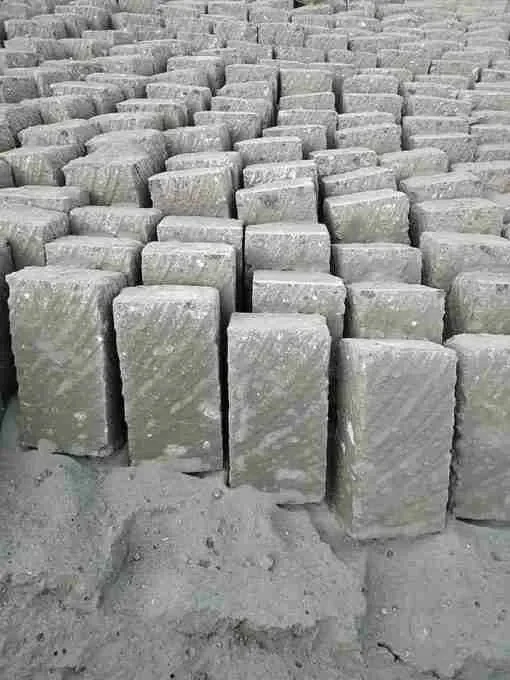
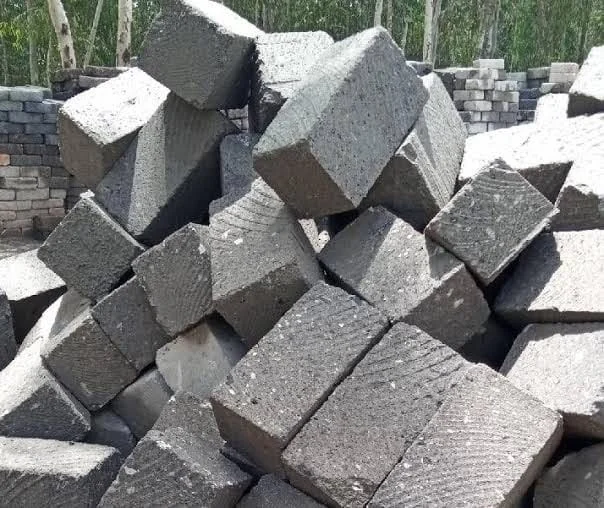
Check the catalogue descriptions only after the technical requirement is clear. BuildSupply lists 6-inch machine-cut stones and 9-inch machine-cut stones as distinct products. Their names do not establish the correct wall thickness for your building or confirm every dimension needed for the estimate.
Keep a distinction between named thickness and the stone’s face dimensions. A piece count calculated from face area needs length and height. The thickness matters to the approved wall specification but cannot replace either face measurement in the arithmetic. Ask for the exact measurement basis before comparing quantities.
Stone quantity estimates: calculate wall area segment by segment
For a rectangular segment, multiply its measured length by the height included in the approved scope. Suppose a hypothetical wall measures 12 metres by 2.8 metres. Its gross face area is 33.6 square metres. That result applies only to the rectangle being measured.
Now consider an opening measuring 1.2 metres by 1.5 metres and a door opening measuring 0.9 metres by 2.1 metres. Their areas are 1.8 and 1.89 square metres. Deducting both from 33.6 gives 29.91 square metres. Confirm that these deductions match the project’s measurement method before using the number commercially.
Do not add both faces of an ordinary single wall merely because it can be viewed from two sides. A purchasing calculation needs to reflect the actual construction, not the total surface being plastered or painted. Where the design uses multiple leaves or another wall arrangement, ask the quantity surveyor to state how the stone quantity is measured.
Irregular shapes require their own measured treatment. A stepped wall, gable or changing height cannot be assumed to match one rectangle without checking. Mark exclusions such as non-stone infill or separately measured structural elements. The objective is to reproduce the approved scope, not to simplify away important differences.
Stone quantity estimates: turn net area into a theoretical count
Theoretical counts depend on the stone’s face dimensions and the assumed joints. For illustration only, suppose a specified piece has a face length of 0.4 metres and face height of 0.2 metres. Ignoring joints, its face area is 0.08 square metres. A 40-square-metre wall would require 500 such face areas.
That simple calculation is not yet a purchase order. It ignores joint dimensions, bond, corners, cuts and the actual specification. If the project’s accepted estimating method uses a modular length of 0.41 metres and height of 0.21 metres, the theoretical module area becomes 0.0861 square metres. Dividing 40 by that area gives approximately 464.58 modules.
The difference between 500 and about 465 shows why assumptions must be visible. It does not justify selecting the lower number to reduce a budget. The responsible professional should confirm which method applies, how edge conditions are handled and what rounding is appropriate. Never present either hypothetical count as a universal stones-per-square-metre rate.
Enter verified inputs in the walling stones calculator and compare the output with your manual workings. If the results differ, inspect the dimensions and joint assumptions before changing the order. Save the input values and date so another buyer can reproduce the calculation.
Stone quantity estimates: keep allowances separate from measured work
An allowance explains a purchasing decision beyond the theoretical requirement. It might address approved cutting needs or a defined contingency. State its reason and authorisation. Do not apply a familiar percentage to every stone package without checking whether it suits the project.
For a hypothetical net requirement of 800 pieces, an independently approved allowance of 24 pieces produces an enquiry quantity of 824. The register should show 800 and 24 separately. This allows the project team to compare what was expected with what was cut, damaged, returned or left unused.
Avoid counting the same uncertainty twice. If a quantity surveyor has already included an allowance in the BOQ, adding another at procurement stage may duplicate it. Ask whether the BOQ figure is a net measured quantity, an order quantity or another basis. Record the answer against the relevant line.
At completion, review the allowance using actual records. A difference may come from design changes, counting errors, site losses or a revised cutting pattern. Label the cause rather than treating every remaining stone as proof that the original estimate was excessive. The calculation should improve future planning without concealing this project’s decisions.
Stone quantity estimates: do not mix foundation and walling sales units
BuildSupply’s machine-cut stone category contains products sold per piece in the catalogue. Foundation stone listings can use other units. For example, the foundation stones listing records a length-based sales unit. Confirm the meaning and measurement basis on the quote.
A length-based foundation item cannot be converted into a piece count merely by borrowing assumptions from a walling stone. The supplied form, required work and agreed commercial measurement may differ. Ask the quantity surveyor to bridge the BOQ requirement and the supplier’s unit explicitly.
Set up a unit-mapping column with three entries: BOQ unit, requested purchasing unit and agreed evidence at delivery. Leave an unresolved conversion marked as a question. An unsupported conversion can make an apparently precise total less reliable than a clearly stated information gap.
For foundation material enquiries, provide the approved foundation schedule and ask how the quoted unit will be measured. Do not infer ground suitability or foundation dimensions from the product page. Those decisions depend on the actual project and qualified design advice.
Stone quantity estimates: match quantities to work fronts and receiving space
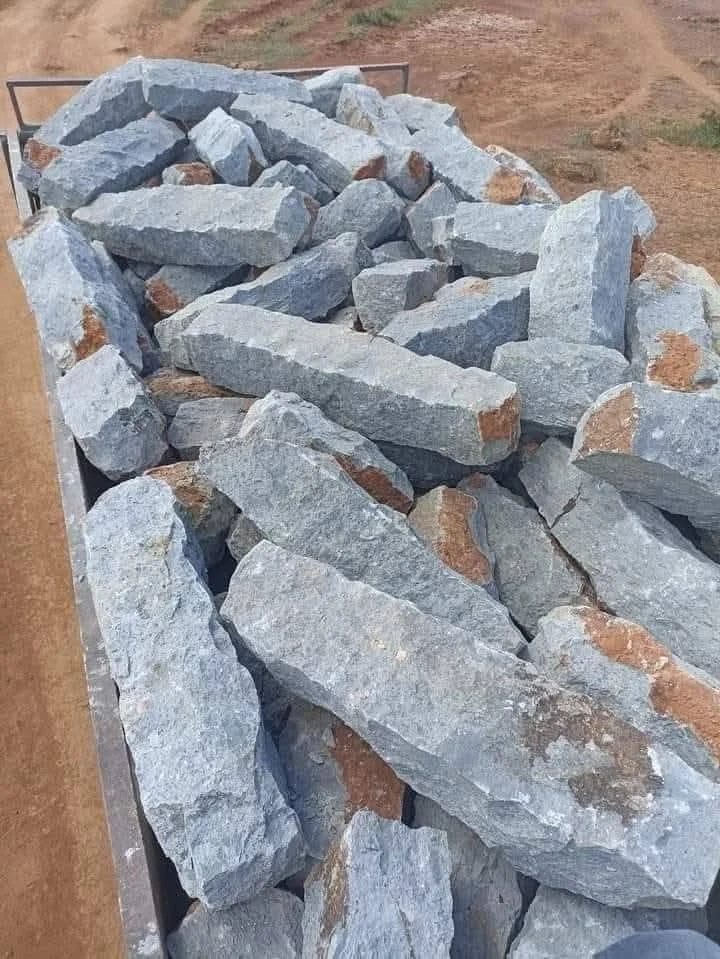
For a large order, divide the authorised quantity into releases linked to identifiable work fronts. State which wall segments a release covers and whether common stock may be issued elsewhere. This prevents the first delivery from disappearing into several teams’ work without a usable balance.
Consider the receiving area before requesting a full-project delivery. The site should have a planned location and competent arrangements for unloading and stacking. Ask the supervisor to check pedestrian routes, working areas and access. A procurement estimate does not establish safe stack heights or ground bearing capacity.
Weather may change access and storage readiness. Consult the KMD seasonal forecast service, and check the site closer to dispatch. Do not convert a broad regional forecast into a guarantee about a specific road or unloading area.
Record each release against accepted deliveries, not just transport arrivals. If a load is disputed, keep its received count and acceptance status distinct. The order balance needs to show what remains outstanding without erasing material physically present on site. Resolve the status through the agreed contract process.
Check the enquiry before requesting approval
Give a reviewer the wall register, quantity calculation, approved allowance and catalogue references. Ask them to check for missing segments, repeated openings and inconsistent units. Review the latest drawing revision at the same time. Correct arithmetic on an obsolete drawing still produces the wrong order.
Use an independent check for duplicated lines. A boundary wall might appear in an external works schedule and also in a general stone summary. Identify the source of each quantity before combining totals. Where two schedules overlap, obtain a clear instruction about which controls the purchase.
Public organisations should route purchasing through their authorised process. The PPRA notice on standard tender documents offer official procurement document references. This quantity worksheet is a technical purchasing aid; it does not choose a procurement method or establish compliance with legal requirements.
Present unresolved assumptions in a short approval note. For example: exact face dimensions awaiting confirmation, an opening revised but not measured, or a foundation unit not yet agreed. A useful estimate tells the committee what it can approve and what still needs checking. It should not disguise uncertainty with extra decimal places.
Build the receiving check into stone quantity estimates
Agree how pieces will be counted and condition recorded before dispatch. Use the order’s exact descriptions on the receiving form. When several stone sizes arrive together, maintain separate tallies. A combined count cannot identify a shortage in the particular size required by the next wall segment.
Count exceptions separately. Record a delivered piece with disputed size or damage as received but not automatically accepted. Note the evidence and person responsible for resolution. Do not issue unclear stock to a work team merely to clear the unloading area, because later reconciliation becomes difficult once pieces are installed or mixed.
After acceptance, connect stock issues to the wall identifiers used in the estimate. This does not require counting every movement in a complicated system. A consistent register can show where significant quantities went and support a reasoned request for more material. The scale should suit the project.
Prepare your next enquiry through the walling bulk quote form, attaching the approved schedule and clear units. The materials for walling page can help organise catalogue choices. Ask BuildSupply to confirm product measurements, quantity basis, destination feasibility and complete commercial terms before committing an order.
Keep stone quantity estimates attached to their drawing revision. Recheck stone quantity estimates after a confirmed change in openings or wall dimensions.
Related buying guides
- Building material quote comparison: find the true delivered cost
- School building material RFQs: make every quote comparable
Frequently asked questions
How many stones are needed per square metre?
There is no rate stated here for every stone. The calculation depends on verified face measurements, joint assumptions, wall details and the project’s measurement method.
Should window and door openings be deducted?
Follow the project’s agreed measurement rules and approved drawings. Keep the deductions visible rather than silently changing a total wall-area figure.
Does a six-inch product name provide all calculation dimensions?
No. A theoretical face-area count also needs the applicable length and height measurements. Confirm those on the quotation and specification.
Can I order foundation stones using my walling piece count?
Not without an approved conversion and agreed unit basis. Foundation products may use different sales units and specifications from walling pieces.
What allowance should I add for breakage?
Use a justified allowance approved for the project. Keep it separate from measured work and avoid duplicating an allowance already included elsewhere.
Does this estimate decide whether a wall is structurally suitable?
No. The responsible qualified professional must approve the design and material specification. This guide addresses purchasing calculations and records.